
TL;DR
- Foraging is one of six trade skills providing essential crafting materials and rare resources
- Early game zones like Medrick Monastery and Dyorika Plain offer safe, mob-free gathering areas
- Island expeditions to Lullaby and Slime Islands yield high rewards but require risk assessment
- Late game locations in Anikka and Breezesome Brae feature dense node clusters for efficient farming
- Always prioritize safety zones and optimize routes to maximize resource collection per session
Lost Ark stands as a premier MMORPG experience that has captivated millions since its global debut through Amazon Games in early 2022. Originally launched in South Korea during 2019, this expansive role-playing game combines intricate PVE content, challenging raids, and immersive world exploration with robust crafting systems. The game’s rapid ascent on Steam platforms demonstrates its compelling gameplay mechanics and engaging progression systems that continue to attract new adventurers.
While Lost Ark offers diverse gameplay elements including dungeons and PVP combat, many players encounter significant challenges with the foraging system. This essential gathering skill often becomes a stumbling block for progression, particularly for those unfamiliar with MMORPG resource collection mechanics. Understanding foraging locations and optimization strategies becomes crucial for advancing through the game’s crafting and upgrade systems.
The core progression system in Lost Ark heavily emphasizes resource acquisition through various collection methods. Players regularly seek crafting components, elusive Mokoko Seeds, and time-limited Adventurer’s Tome collectibles. Among the six specialized trade skills available, foraging serves as a primary method for obtaining botanical resources. When activated, this skill reveals interactive gathering nodes across both primary and mini-map interfaces, highlighting prime foraging locations throughout Arkesia.
New players frequently struggle with identifying optimal foraging routes and understanding node respawn mechanics. Even experienced adventurers may face difficulties locating high-yield zones as they progress to more challenging territories. Strategic foraging requires understanding both location density and environmental factors that impact gathering efficiency.
For newcomers establishing their resource foundation, West Luterra’s Medrick Monastery area provides an exceptional starting point. Access this zone efficiently by traveling to Freyad Lake Triport or utilizing the connecting portal within Bilbrin Forest. Upon arrival, explore the southern and eastern grottos and pathways radiating from the lake perimeter. These botanical-rich territories offer abundant plant resources with minimal enemy encounters, creating ideal learning environments for mastering gathering mechanics.
The entire lake circumference features densely packed foraging nodes in virtually mob-free conditions, allowing uninterrupted collection sessions. East Luterra’s Dyorika Plain represents another lucrative early-game foraging destination with expansive farming territories. This region consistently yields high quantities of gather-able flora while maintaining relatively safe conditions for lower-level characters.
Throughout the Dyorika Plain, foraging markers populate the minimap across locations like Monterque Ranch and Monterque Manor. While these areas contain more hostile creatures than West Luterra zones, the combat challenges remain manageable for players developing their combat skills alongside gathering proficiency.
Croconys Shore, particularly its western sector, completes the early-game foraging circuit. Navigate from the Memorial Monument toward Wild Market territory to discover concentrated lines of crafting materials including both arboreal and herbal resources. Enemy density in these coastal regions presents minimal threat to players focused on resource acquisition.
Pro Tip: Establish circular routes that maximize node respawn efficiency. Complete a full circuit in approximately 10-15 minutes, then the initial nodes will begin regenerating. Avoid linear paths that waste travel time between gathering clusters.
Island expeditions offer specialized foraging opportunities with unique risk-reward profiles. Lullaby Island, situated east of Wavestrand Port, features diverse harvesting nodes containing plants, timber, and mineral deposits. The island’s accessibility makes it popular among intermediate players, though competition for resources can be intense during peak gaming hours. Beyond standard gathering points, Lullaby contains rare harvesting nodes that yield superior materials for advanced crafting recipes.
Slime Island presents a dramatically different proposition, requiring careful risk assessment before embarking. Reach this territory via brief sea voyage from Arid Path, but recognize its designation as a Player versus Player zone introduces significant danger. Human opponents can attack foraging players unexpectedly, potentially resulting in character death and lost progress.
The island’s environmental hazards include numerous slime mobs patrolling the terrain. However, the compensation for these dangers comes in abundant foraging concentrations, particularly around the initial landing area where nodes cluster densely.
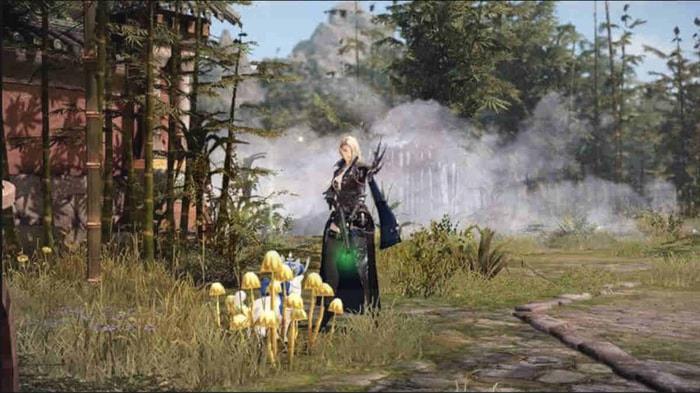
Common Mistake: Beginners often underestimate the PVP risks on Slime Island. Always check the zone designation before disembarking and consider traveling with party members for protection during gathering sessions.
As players advance to endgame content, foraging efficiency becomes increasingly important for sustaining progression. Anikka’s Delphi Township region offers premium late-game gathering opportunities with its surrounding fields providing prime foraging real estate. The adjacent Delphi Forest contains tightly concentrated node clusters that maximize collection rates while minimizing travel time between gathering points.
These territories maintain relatively low enemy density, with most hostile creatures presenting minimal threat to properly geared characters. The area’s layout facilitates efficient route planning that can yield substantial resource hauls within single gaming sessions.
Breezesome Brae represents another exceptional late-game foraging destination, abundant with mineral deposits and timber resources. The region’s elemental creatures typically remain easily avoidable, creating safe harvesting conditions for focused resource gathering.
Within Breezesome Brae, prioritize Verdure Plains and Breezesome Forest sectors for their exceptional node density. These zones prove ideal for players optimizing their late-game crafting material acquisition strategies.
Advanced Strategy: Combine foraging with other trade skills in the same session. While waiting for node respawns, engage in logging or mining activities to maximize overall resource yield per time investment.
Mastering these strategic foraging locations enables players to effectively navigate this crucial aspect of Lost Ark’s economy and crafting systems. For comprehensive guidance on character development, consult our Class Guide to optimize your gathering capabilities through proper specialization choices.
Action Checklist
- Unlock foraging trade skill through early quests and equip gathering tools
- Establish Medrick Monastery circuit for safe early-game resource accumulation
- Progress to Dyorika Plain and Croconys Shore as combat proficiency increases
- Schedule Lullaby Island expeditions during off-peak hours to minimize competition
- Master late-game routes in Anikka and Breezesome Brae for maximum efficiency
No reproduction without permission:OnLineGames Guides » Top Foraging Locations in Lost Ark Master Lost Ark foraging with expert location guides, efficiency strategies, and advanced gathering techniques